// DECISIONHEALTH
Is Your Org
STRUGGLING
with risk?
WE PROVIDE Care.
We diagnose decision pathologies and prescribe precise treatment to unlock the full potential of your own workforce - so you can make high-stakes decisions with confidence and continue to nurture your decisionhealth.
// SYMPTOM SELF-CHECK
We have too much data but no clear signal.
Our team is gridlocked - we can't reach consensus.
We don't know what we don't know.
We struggle with forecasting the long-term impact of the decision we need to make.
Sunk-costs, emotional and personal attachments are distorting the objectivity of our thinking.
We keep revisiting the same decision without resolution.
// PATIENT JOURNEY
Your Path to Decision Clarity
Five structured phases - from symptom recognition to long-term after-care. Every engagement is tailored to your specific decision context to harness the skills and expertise of your team.
SCREENING
Triage and initial scoping. You identify the decision you're struggling, and we provide a tailored intake process, to include understanding the stakeholders, participants, and information or knowledge base you are relying upon.
The initial Intake appointment is typically an hour. Your provider will determine the information needed to complete a rigorous diagnosis and work with you to create a realistic timetable based on your needs.
The Intake is similar to your healthcare provider ordering lab-work and other screening based on your initial symptoms
CONSULTATION
A virtual session - we prescribe a treatment plan aligned to your needs and context.
Most diagnostic sessions take 1-2 hours. Compound problems and/or large numbers of projected participants and stakeholders may require more time to diagnose.
A proper Diagnosis in decisionhealth is as critical as it is in physical health. You may have questions about the diagnosis and treatment proposal, so we urge you to set aside enough time for a thorough discussion.
Facilitation sessions typically require 2 hours each, but require a few hours of prep, depending on whether they are synchronous or asynchronous. We will work hard to scope the timing according to your requirements.
Treatment in decisionhealth rarely involves only one course of action, so it is best to anticipate more than one facilitation session. Your provider will work with you to deliver treatment in the manner of you choose - online asynchronously, in-person, synchronously online, or a mix.
your prescription for acting on results.
Depending on how many facilitations were involved, we aim to deliver a thorough action plan within two weeks. We turn your structured work into actionable insights that are organic to your organization and its culture, making them easier to implement and likely to stick.
An Action Plan allows you to take charge of your decisionhealth in the future by adopting better critical thinking habits and structured techniques to help you face future challenges to your decision-making.
and project your future decisionhealth.
We recommend an after-care virtual consultation within three to six months of your treatment. We start with a simple, 30-minute check-in, and can add consultations if needed.
Think of After-Care like your check-up after fully recovering from an earlier treatment. It's an opportunity to ensure your Action Plan is on track and still working for you.
// CONDITIONS WE TREAT
We've seen this before.
And we know how to treat it.
Every decision-making problem has a root cause. We diagnose and treat
the full spectrum of decision pathologies.
Cognitive
Organizational
Informational
Cultural
// OUR PROVIDERS
UNMATCHED EXPERIENCE



National Security Council

Department of Defense
Central Intelligence Agency
Juneteenth is a Federal Holiday!
Public Servant's Oath of Office
The text of the public servant's oath, as defined in 5 U.S. Code § 3331, is:
Do not miss!
Great offer today!
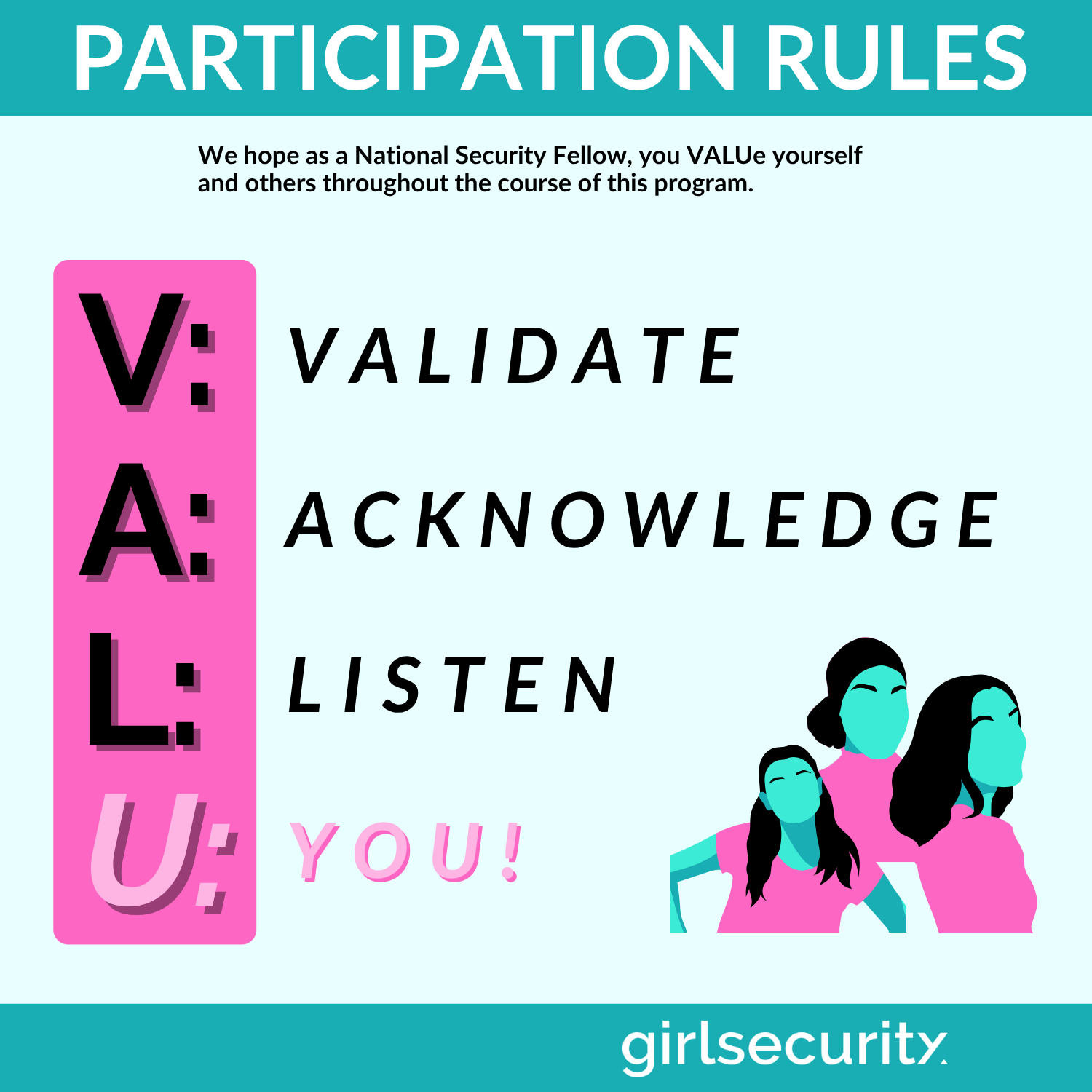
We validate every voice;
we acknowledge hard conversations with patience;
and, we listen to all perspectives with respect.
Because YOU are important!
Fluent Frogs
Groovy Girls
Spy Kids
Do not miss!
Great offer today!
Sovereignty
A government's internal control over its territory and population and external independence from the control by other states.
Alliances
A group of nations that bind together based on common interests.
Treaty
A formally signed agreement between authorized representativs of member states that is adopted as law within the member states.
Containment
In foreign policy, this is a principle that seeks to constrain or prevent another nation or group of nations from expanding their territorial control or reach.
Hegemony
Hegemony is dominance by one party over another, but through influence and by having an advantageous power dynamic, rather than through fear, or by making military threats.
Sanctions & Embargoes
Sanctions can range from mild to severe, including specific trade restrictions and financial penalties. An embargo is an extreme, comprehensive ban on trade meant to isolate a nation entirely.
Non-state Actor
Political entities that are not formally part of a government. They might be political activist groups, a single individual, or companies, religious institutions and many other types of groups.
Gina Bennett
-
Distinguished Graduate of the Marine Corps War College, M.A. Security Studies
-
B.A. Economics and Foreign Affairs, University of Virginia
-
Author of "National Security Mom 1 & 2" and "If Two of Them Are Dead"
Shannon Harrison
Learning and Training
Shannon is an experienced teacher, counselor, and educational leader, from high school English teacher to college access counseling and administration, to supporting young people and their families in postsecondary planning and career exploration.
A native of the San Francisco Bay Area, Shannon keeps herself busy by raising three incredible, little humans alongside her husband, a fellow educator.
Monica Sanchez
Learning and Training
Monica’s educational experience began with teaching high school English, where she cultivated a passion for helping underserved youth discover their strengths and navigate their growth areas.
Monica is also an experienced assistant principal, where she focused on ensuring all ability students were given the guidance, instruction, and tools they needed to succeed in their personal and/or academic journeys.
Michéle Flournoy
Career Highlights
Current Co-Founder and Managing Partner of WestExec Advisors, A strategic advisory firm
Former Co-Founder and Chief Executive Officer of the Center for a New American Security (CNAS) (currently serves as Chair of the Board of Directors). A bipartisan think tank dedicated to developing strong and principled national security policies.
Co-led President Obama’s transition team at the Defense Department.
Senior Advisor at the Center for Strategic and International Studies
Distinguished research professor at the Institute for National Strategic Studies at the National Defense University (NDU)
Deputy Assistant Secretary of Defense for Strategy and Threat Reduction
Deputy Assistant Secretary of Defense for Strategy
Welcome to DESIGNED!
Save up to $9600
Additional Products
Watchlist
$500
Inventory
$250
Disclosure
$500
Registry
$250
Index
$250
Package
$1,500
A Harm Scenario Watchlist is created by leveraging a broader set of stakeholders to generate future use scenarios that expose hidden risks embedded within your decision. A weighted ranking technique combined with alternative futures forecasting generates scenarios are rated against the stated intentions of the decision to avoid introducing participant bias, and to keep participants focused on your organization's goals.
Use the Harm Scenario Watchlist by conducting a periodic review to identify whether any of the indicators of potential harm have been observed in their earliest stages, to enable action before it's too late.
An Intervention Point Registry surfaces the sub-decisions that surround or undergird your high-stakes decision. Often when we are focused on the risky choices and challenges, we lose sight of the smaller decisions we have to make along the way.
Intervention points are identified by walking each prioritized harm scenario backward to identify the smaller decisions and choices that, if different, might have altered the outcome in ways that may be surprising or disproportionate.
The User Risk Disclosure is especially useful for decisions related to a new product or customer service. The User Risk Disclosure is drawn from all the phases and identifies the full range of stakeholder communities affected by your decision(s), to include those you may not have considered. It also identifies, based on their perspectives, what they want to know about your product or service so that they do not misuse it or unintentionally contribute to harm scenarios. An important element of the disclosure is seeing what your stakeholders and customers expect, rather than focusing on what you think you owe them. The gap can be dangerous for your organization's reputation.
Every analysis rests on assumptions. Naming them explicitly in the Assumptions Registry creates a living document that can be tested, updated, and strengthened over time. Each assumption is flagged for its level of fragility and the level of effort required to monitor the risk of retaining it over time.
The Knowledge Gaps Index catalogs the information or evidence that you currently do not have that could materially change your decision. Setting aside the noise of more data and information to target what you really need to know is the goal of the index. The Index can be an invaluable tool for guiding future research and information gathering, so that you are spending resources and time trying to acquire the knowledge you need, rather than the knowledge that you can obtain. There is often a significant difference.
All five artifacts at a discounted price.